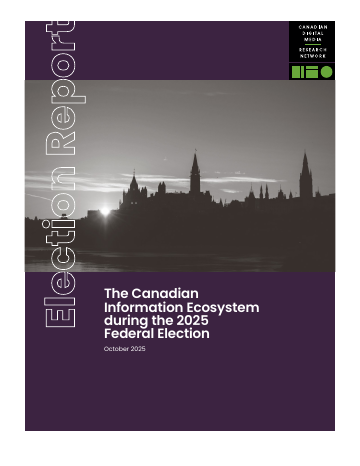
The Digital Ecosystem Research Challenge Report
Elizabeth Dubois, Taylor Owen
Résumé analytique
The Digital Ecosystem Research Challenge was created to support the research community working to understand how the spread of information through the digital public sphere shapes the character and integrity of elections, following an evolution in manipulation tactics observed since the 2015 Brexit referendum and 2016 US presidential election. The Challenge had three core components: an open competition that selected 18 research projects (grants awarded July 2019) to study the 2019 Canadian election; provision of shared online and survey data on the Canadian election, in partnership with the Digital Democracy Project at the Max Bell School of Public Policy at McGill University; and a symposium of challenge winners, policymakers, and civil society to discuss findings, summarized in this report.
Across the 18 projects, core findings spanned four themes. On political advertisement and personal data, all advertisers complied with Elections Canada rules, though some obscured their identity via "faux fact check" advertisers; most respondents were unaware parties collected data on their religion, ethnicity, and political preferences, and becoming aware made a majority less likely to speak with party personnel; the Liberal Party made greater use of Facebook's targeting tools than competitors, and Facebook appeared to comply with transparency laws. On online harassment and hate speech, less than 10% of tweets directed at candidates were toxic or insulting, with no statistical correlation between toxic-message volume and candidate gender, while about 40% of messages received by candidates on Twitter expressed at least "low negativity"; tweets linking anti-Muslim sentiment with anti-Liberal messages escalated sharply as the election approached before receding. On public opinion and participation, anti-Trudeau and pro-Liberal/NDP meme canons had limited spread; Instagram political engagement tended to stay within pre-existing social circles rather than professional accounts; and the source and methodological presentation of a pre-election poll made little difference to perceived reliability. On the flow of misinformation, the alt-right used site-specific strategies (e.g., YouTube vlog-style "microcelebrities") to recruit and reinforce fringe beliefs, and several disinformation and media-manipulation campaigns were identified and analyzed, but the study did not find any that succeeded in affecting the integrity of the 2019 election.
Further findings on issue framing and agenda setting showed significant partisan differences in concern for climate change, with low priority among Conservative supporters despite majority Canadian concern; NDP candidates tweeted most about Indigenous issues, followed by the Green Party and Liberals, with urban candidates tweeting more frequently on topics including reconciliation and clean drinking water; Twitter discussions of migration were markedly more negative than mainstream media headlines, with immigration-positive posts about as likely to receive likes but less likely to be retweeted; and while ordinary citizens rarely described voting decisions in moral terms, politicians — particularly right-wing leaders Andrew Scheer and Maxime Bernier — frequently invoked moral rhetoric emphasizing loyalty and authority.
Points saillants
- 18 research projects from across Canada and internationally collaborated using a shared dataset covering Twitter, Facebook, Reddit, Instagram, and survey data from the 2019 election campaign.
- Online harassment of political candidates was documented, with women and racialized candidates disproportionately targeted, causing some to withdraw from social media or avoid certain topics.
- Facebook political advertising was used extensively by parties; political data privacy practices varied significantly across parties, raising transparency concerns.
- Foreign-linked accounts including MAGA-affiliated profiles showed higher proportions of likely automated accounts, but no evidence of coordinated electoral manipulation was found.
- A fringe ecosystem on 4chan, YouTube, and Reddit circulated memetic and media manipulation campaigns with limited penetration into mainstream political conversation in 2019.
Publications connexes
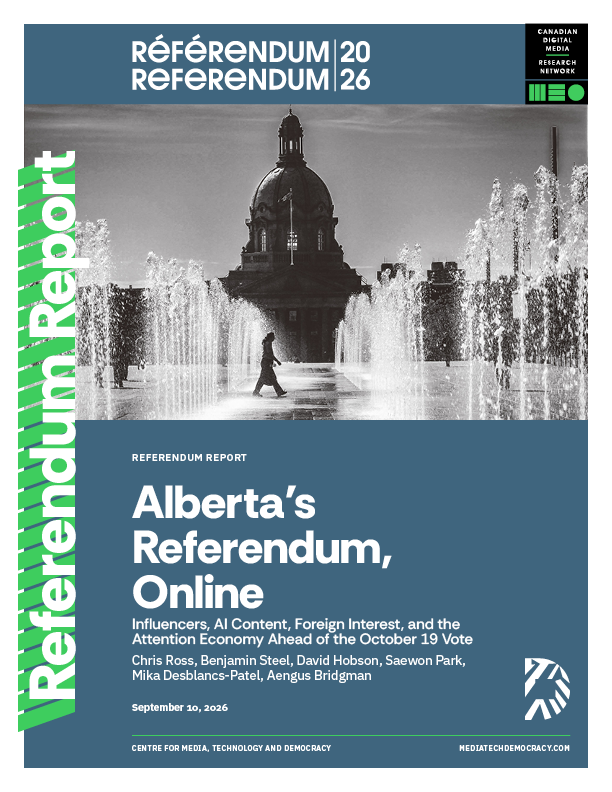
Le référendum de l’Alberta, en ligne : influenceurs, contenu généré par l’IA, intérêts étrangers et économie de l’attention à l’approche du vote du 19 octobre
Lire la suite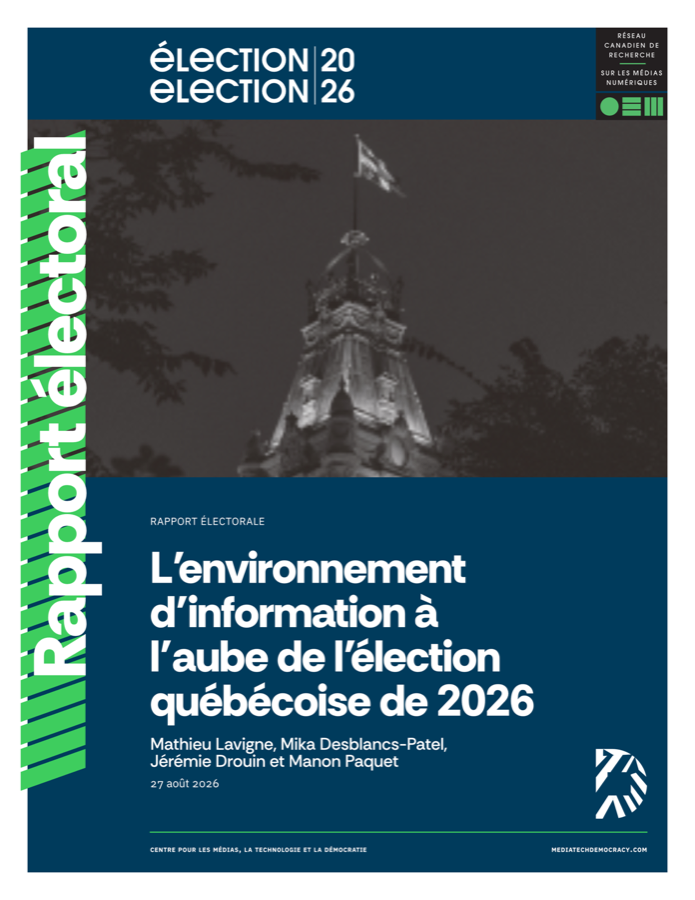
L’environnement d’information à l’aube de l’élection québécoise de 2026
Lire la suite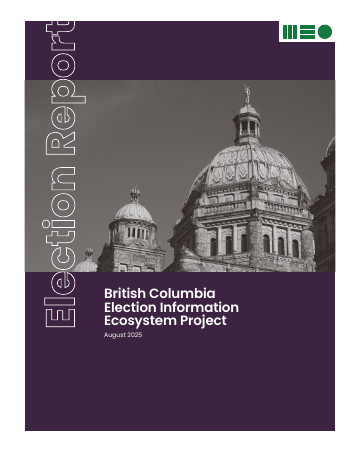
Projet sur l'écosystème informationnel de l'élection de la Colombie-Britannique : rapport final
Lire la suite