Four things to watch out for in the Digital Safety Act
Taylor Owen
Résumé analytique
This commentary by Taylor Owen addresses the redrafted Online Harms Act, now recast as the Digital Safety Act, and identifies four design choices to watch as the bill returns to Parliament, drawing on his submissions to the AI Task Force and the Expert Panel on Online Safety.
First, the government should amend rather than rewrite the core architecture of Bill C-63 -- its functional definition of regulated services, duty to act responsibly, duty to protect children, systemic risk assessment, transparency obligations, and independent regulator -- rather than inventing a new model. Second, on under-16 access, a moratorium is preferable to an outright ban: a temporary restriction that lifts once a platform proves, through compliance with an Age-Appropriate Design Code, that its product is safe for young users, paired with amendments to PIPEDA for youth data and a prohibition on photo-ID uploads for age assurance. Third, consumer-facing AI chatbots should be brought inside the framework, but with bespoke obligations rather than rules borrowed from social media, since chatbot harms arise from generation within a private, intimacy-simulating exchange rather than from distribution of existing content; obligations should attach to consumer-facing deployment and a defined set of serious harms rather than to research or model development. Fourth, the bill needs an independent regulator with real technical capacity and nimbleness -- able to hire outside standard Treasury Board classifications, situated across the country rather than only in Ottawa, and given both a data-access regime for vetted researchers and a narrower mandatory-reporting channel on companies' own safety decisions.
Publications connexes
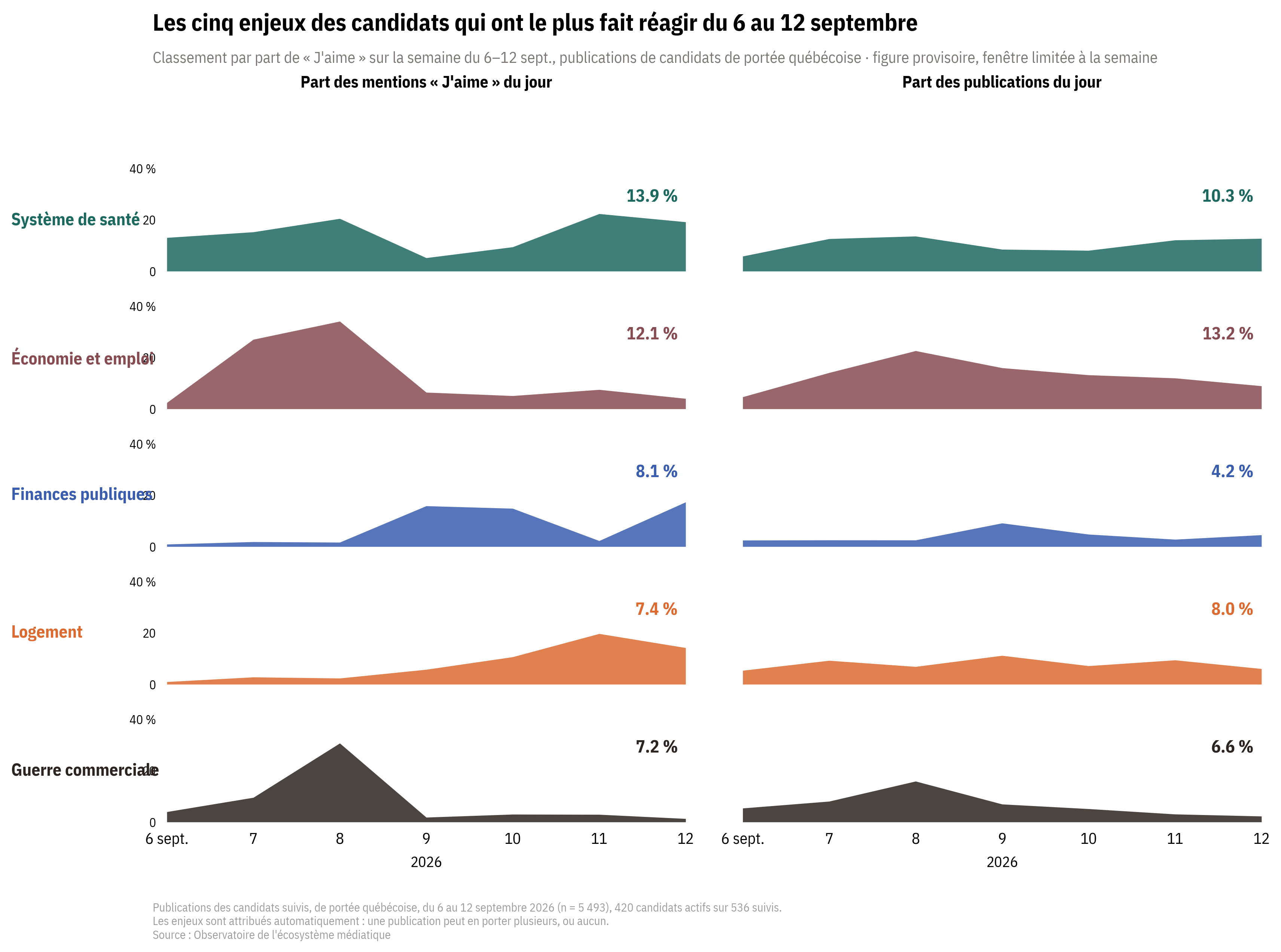
Mise à jour hebdomadaire 3 : la première élection québécoise à l'ère de l'IA générative
Lire la suite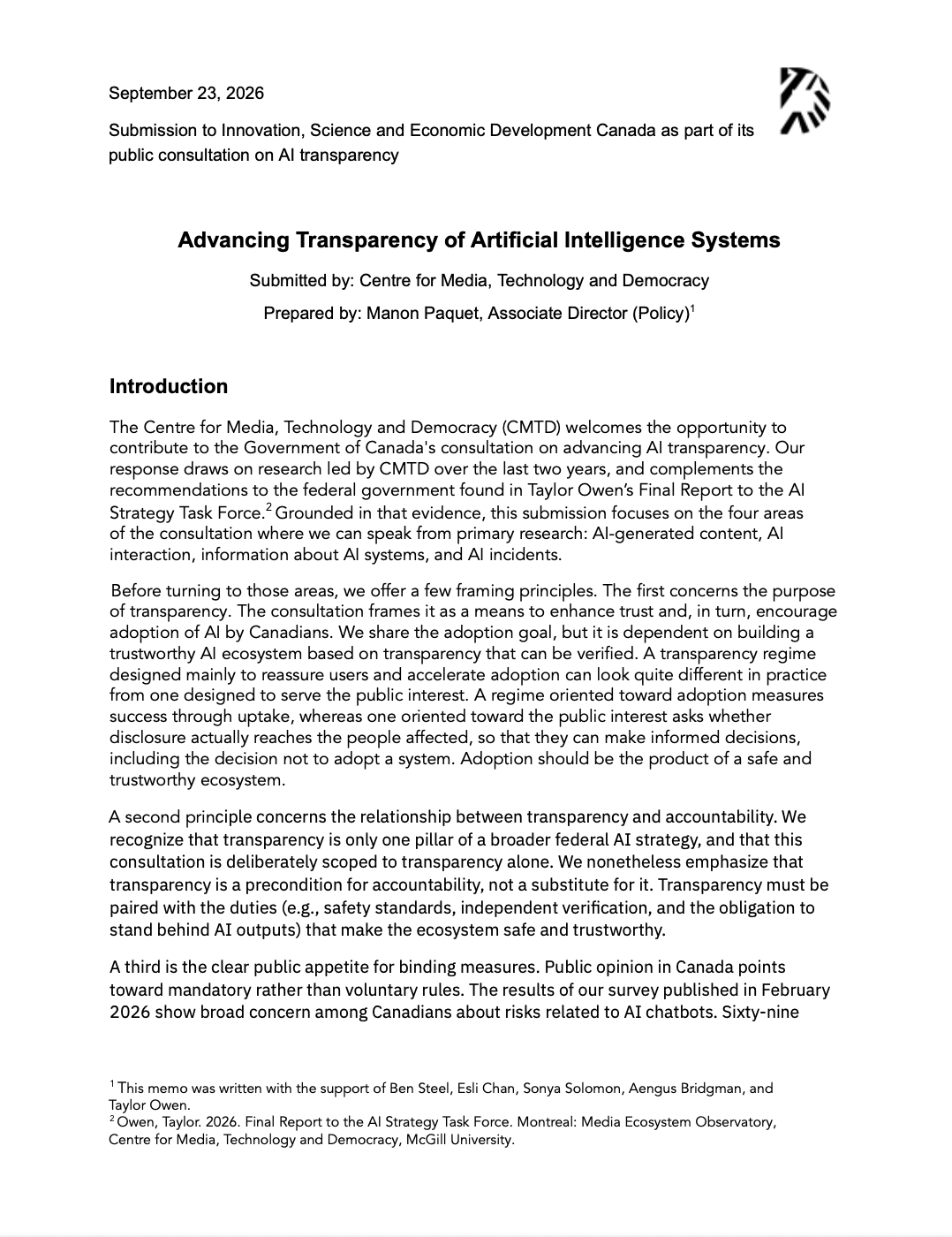
Advancing Transparency of Artificial Intelligence Systems
Lire la suite
AI Unpacked: An Accessible Guide to Engaging Critically with Artificial Intelligence
Lire la suite