Weekly Update 5: Narratives and Perceptions of Electoral Integrity
Media Ecosystem Observatory
Each week during the 2026 Quebec election, we will publish an update presenting the main trends and dynamics we observe in the information ecosystem. These updates will highlight any information incidents, while outlining items that are On our radar but do not rise to the level of an incident. All facts and data are drawn from an original survey, human monitoring of the online information environment, and social media monitoring conducted by the Media Ecosystem Observatory.
Overview
This week was marked by a somewhat higher level of discussion about electoral integrity, notably following the publication of a news article describing possible American interference in the process, and the start of advance voting. After examining the issues candidates discussed across platforms, which we include every week, we assess how much electoral integrity has been discussed since the start of the election, the nature of these discussions, and Quebec voters' perceptions of the issue.
Although discussion of electoral integrity rose slightly after media coverage of possible American interference and the start of advance voting, it has remained marginal since the start of the campaign and focused mostly on interference rather than on the administration of the vote itself. Attention to these issues comes from a small number of accounts and does not appear to have increased Quebecers' concern about foreign interference during the campaign, although the level of concern remains higher than during the 2022 election. A majority of Quebecers are confident that Élections Québec will conduct the election with integrity and neutrality.
In the On Our Radar section, we look at the tendency of some voters to post photos of their ballot on social media, whether doing so is legal (yes, it is legal in provincial elections), and why the practice is generally discouraged.
The Election's Issues: The Candidates' Perspective
As every week during the campaign, we classified candidates' posts from each of the five main parties on Facebook, Instagram, X, YouTube, TikTok, and Bluesky according to whether they mention different political issues from a list of 18 (see Methodology).
As Figure 1 shows, for the third week in a row, posts about the healthcare system and housing were among the five issues receiving the most engagement over the past week, accumulating 14.2% and 10.4% of “likes,” respectively. Thematically, the posts cover a wide range of topics. Those about health address subjects such as access to care, wait times, the private-sector option, CLSCs and local care centres, and the future of Santé Québec. Posts about housing discuss, among other things, the construction of new housing, the cost of home ownership for younger people, and homelessness.
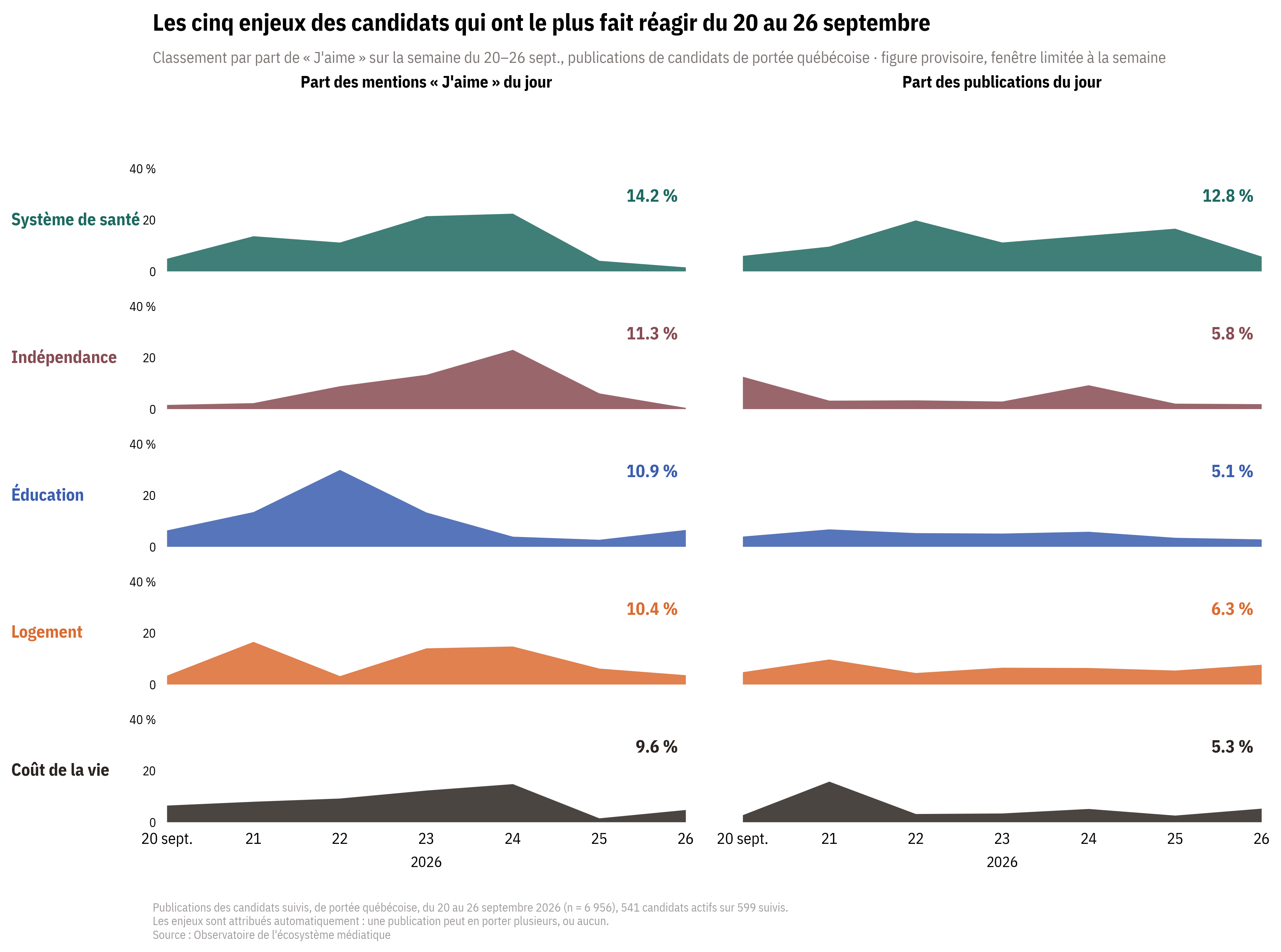
The three other issues — independence, education, and the cost of living — received 11.3%, 10.9%, and 9.6% of “likes,” respectively. Among these issues, only posts about independence focus on a specific topic: the referendum, with most of the engagement coming from posts by candidates from federalist or autonomist parties. On education, posts cover campaign promises on a variety of education-related topics, but a significant share of the engagement relates to the PCQ's position on access to CPEs (subsidized daycare) for asylum seekers. Finally, posts on the cost of living also discuss a number of campaign promises without centring on any clear topic.
Electoral Integrity: The Narratives
To assess narratives about electoral integrity, we used our keyword-based collection of social media posts related to the Quebec election, which we classified using a large language model to identify posts discussing the integrity of the election and, where applicable, the topic of discussion (among eight categories), the tone (alleges, defends, reports), and the entity deemed responsible for the situation.
Between August 1 and September 26, 5,034 of the 92,706 posts analyzed (5.4%) dealt with electoral integrity. These came from 2,447 accounts. As Figure 2 illustrates, the discussion unfolded in four waves tied to distinct events:
- At the very start of the campaign, from August 24 to 28, 998 posts dealt with electoral integrity (8.3% of posts coded during this period). Narratives notably focused on allegations of American interference in the election, mainly in connection with statements by U.S. Commerce Secretary Howard Lutnick that trade negotiations had been suspended because the Canadian government wanted to prevent the Parti Québécois from being elected. That said, the narrative that generated the most posts during this period instead concerned allegations of federal interference linked to announcements of federal investments in Quebec, the perceived collaboration between Mark Carney and Christine Fréchette in response to the trade war, and the organization Mission Leadership Québec. Our September 11 update discussed these allegations, put forward by, among others, Parti Québécois leader Paul St-Pierre Plamondon.
- Next, from September 2 to 4, we observe a second wave of 914 posts (11%) in which allegations of federal interference remained present, but electoral rules and election administration took on a growing role. Two topics stand out in particular among the posts that received the most attention. The first is the availability of election information in English, after Élections Québec announced on September 1 that it was required to send voter information cards in French only because of Bill 96 and because the government had not granted it an exemption. The second concerns the signage rules on the visibility of party names on election signs and, more specifically, the fact that the Coalition Avenir Québec's name or logo does not appear prominently on them. We discussed these issues in our September 11 and September 18 updates.
- From September 16 to 18, the 442 posts identified (5.4%) mainly concerned allegations of fraud or vote buying. The posts discuss some campaign promises perceived as attempts to buy voters, but above all the controversy surrounding a Coalition Avenir Québec candidate who handed out cash to bingo winners by slipping it into party promotional material (see our September 25 update).
- Finally, on September 25 and 26, the 803 posts (16.2%) were dominated by the question of foreign interference, following the circulation of information about possible American interference in the election. This is discussed in more detail below, in the section on foreign interference.
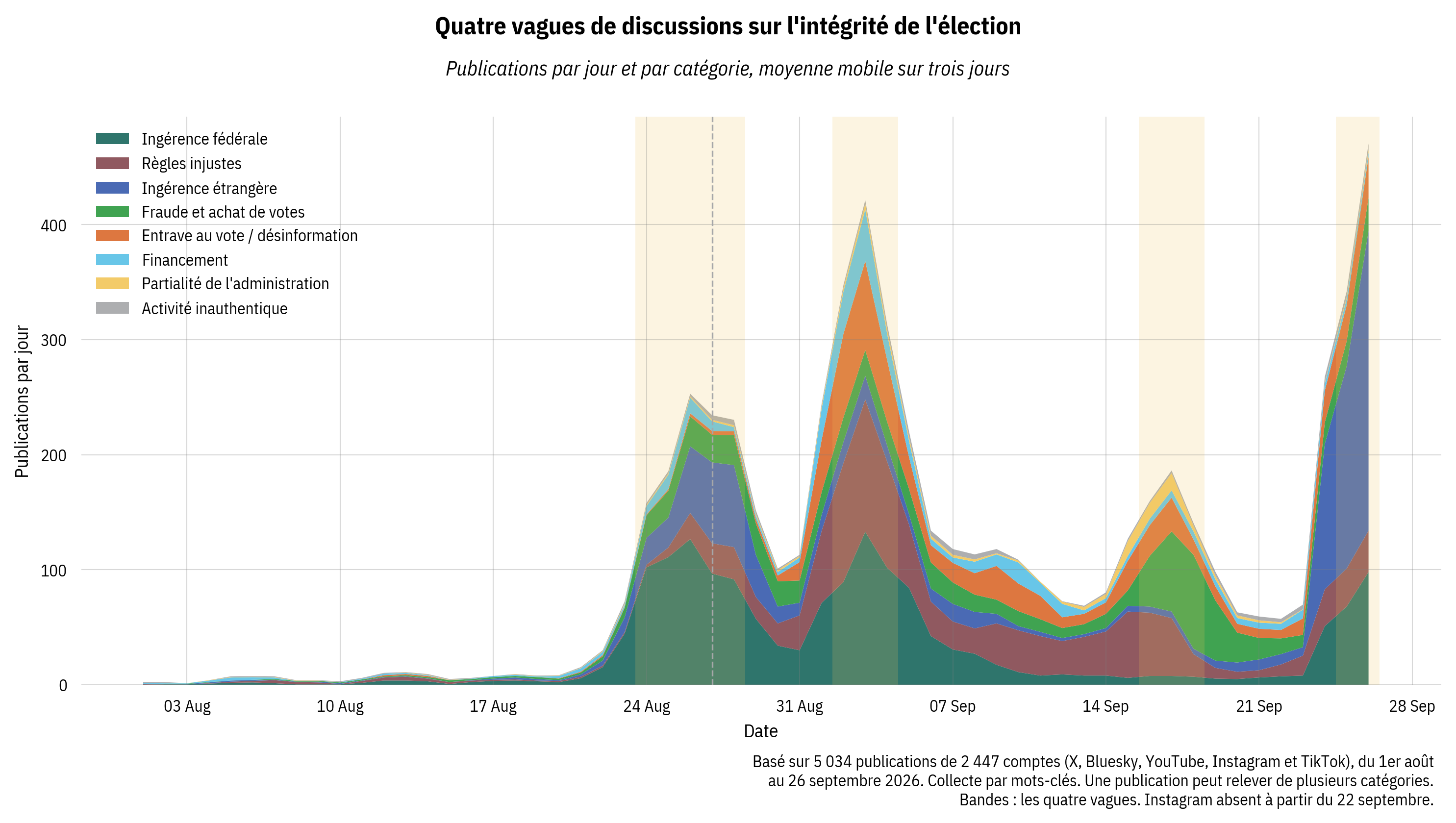
A fundamental finding of this analysis is that the volume of discussion about the integrity of the vote itself and of the count has been minimal throughout the campaign. Moreover, the target of allegations shifted over the course of the campaign: from the federal government to Bill 96, then to a candidate and to a foreign actor. Discussion of these issues was dominated by a relatively modest number of accounts. In total, 308 accounts took part in at least two of the four waves and produced between 38% and 56% of the posts in each. A core of 31 accounts is present in all four waves and accounts for between 10% and 18% of posts, depending on the wave.
Asserting, Reporting, or Refuting
We next assess the extent to which social media posts support, report on, or refute narratives or allegations about electoral integrity. Whether such refutations are expected, or even desirable, can vary depending on the issue. For example, while it is desirable to see unfounded allegations of electoral fraud corrected, the same does not necessarily apply to narratives about the consequences of sending information documents in French only on English speakers' access to the vote.
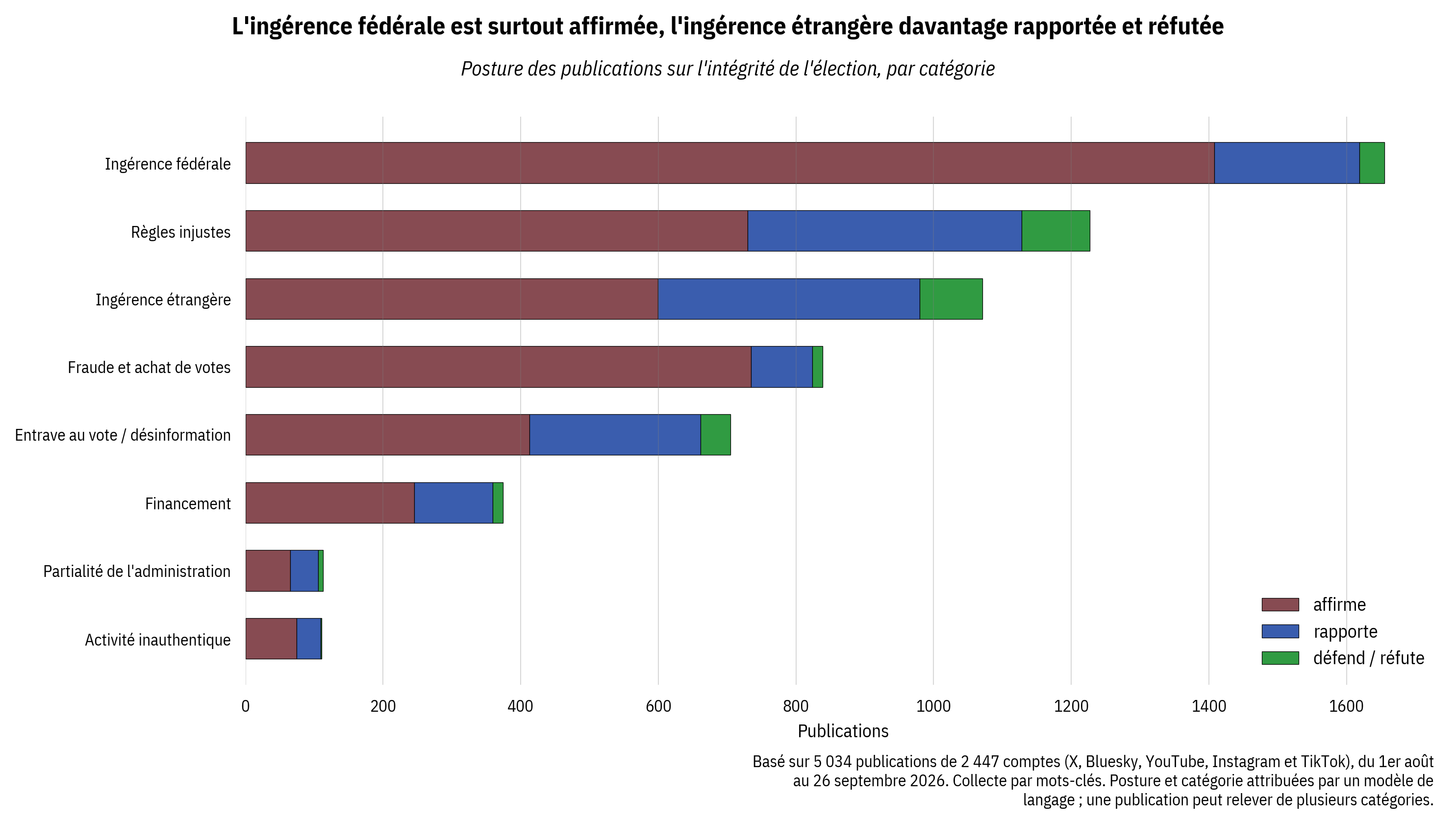
Overall, narratives about electoral integrity are far more often asserted than challenged in public discourse (Figure 3). There is an interesting distinction between discourse about perceived federal interference and interference by foreign countries: a larger share of those discussing federal interference assert that it exists (about 85%), while discourse about foreign interference is more evenly divided between those asserting that it exists and those discussing it (notably in media coverage). In both cases, few posts directly challenge claims of interference.
Finally, the production of content about electoral integrity is much more dispersed than the attention it receives. The ten most active accounts produce only 8.3% of posts, while the ten accounts receiving the most “likes” capture 54% of them. This concentration reaches 83% on Instagram and 80% on TikTok, compared with 26% on X. We observe the same contrast for posts refuting narratives about electoral integrity: a single post by Élections Québec — a TikTok video about the use of pencils and the vote-counting process — accounts for 65% of the “likes” on all content containing refutations.
Candidates Rarely Weigh In on Integrity Discussions
Candidates say little about the integrity of the election: between August 1 and September 24, 250 of their 41,281 posts (0.6%) dealt with the topic, coming from 74 candidates. The PQ (124) and the PLQ (91) account for 86% of these posts, but not on the same stories: the PQ denounces federal interference, notably contracts awarded by the CAQ to Mission Leadership Québec, an organization that promotes federalism; the PLQ denounces the sending of election information documents in French only.
For most events, online discussion, including the media, precedes candidates' involvement. The Journal de Montréal article on Mission Leadership Québec was shared by TVA Nouvelles at 1:09 a.m. on September 2; the first PQ candidates reacted less than six hours later, and the discussion continued long after the peak. Liberal candidates took up the issue of election information in English on September 2, the day after Élections Québec's press release, then reacted within hours to the Superior Court ruling of September 16. Only the case of banknotes slipped into gifts given to bingo winners by a CAQ candidate is an exception: candidates and internet users discussed it within the same hours, on September 17, and the discussion continued over time, including among candidates.
Foreign Interference
On September 25, the Journal de Montréal published an article reporting that a senior official in the Fréchette government had been warned in early September by a counterpart in Mark Carney's government about possible American foreign interference in the Quebec election. The latter reportedly gave the official a copy of a blog post published in February 2026 by the American think tank Defense Analyses and Research Corporation (DARC) outlining strategies to divide Canada, notably by financially supporting the Parti Québécois during the election, fomenting Quebec and Alberta separatism, and negotiating directly with Quebec (see this other article on the subject) to offer it lower tariffs. Following the publication of these articles, outgoing Premier Christine Fréchette first said she was “very concerned” by “serious information about possible risks of foreign interference,” before stating at the end of the day that there was no “cause for concern about the integrity of Quebec's electoral process.” Parti Québécois leader Paul St-Pierre Plamondon stressed that he had not been approached by DARC or the American administration. Online reactions were mainly negative, with many denouncing what they perceive as the Coalition Avenir Québec's exploitation of the issue.
Although our data focus on social media and cannot capture certain forms of interference, which are hidden or concealed by definition, they nonetheless offer a picture of the attention paid to the Quebec election campaign outside Quebec. Specifically, we analyzed content published by leading American political influencers, Russian and Chinese state media and official accounts, and content circulating on WeChat. We observe a low level of interest in the Quebec election:
- American influencers: The 500 major American influencers we track across all platforms mentioned Quebec only 28 times in their posts since August 25, and barely twenty of these posts related to Quebec politics. Broadening the search, we identify a total of 29 politically relevant posts mentioning Quebec or “French Canadians.” These posts mainly shared, and often criticized, statements by the Trump administration (in particular Donald Trump, Howard Lutnick, and Mike Waltz) following the suspension of trade negotiations. No post appears to directly promote the Parti Québécois or Quebec sovereignty.
- Russian and Chinese media and official accounts: Russian state media and official accounts made only four social media posts mentioning Quebec, including sharing a statement by Donald Trump, a notice from the Russian embassy about polling stations in Montreal for the Duma elections, and a helicopter crash. Chinese state media and official accounts publishing in French or English do not appear to have made any posts related to Quebec on the main platforms used in Quebec, and the broader set of posts we collected about the Quebec election does not appear to link to their websites.
- WeChat: We identified 81 articles mentioning Quebec on WeChat, which came mostly from the Chinese diaspora in Canada and consisted mainly of explainer videos or commentary on the trade war. Among content originating from China or Chinese state media, Quebec was mentioned only briefly and in the context of the trade war with the United States. Collection relies on searches conducted twice a day in Sogou's WeChat search engine, using 17 Mandarin keywords related to Quebec. Only public articles are collected, and the figures should be considered minimums, as Sogou limits the number of results displayed.
What Do Quebec Voters Think?
Confidence in the Electoral Process
Since the start of the campaign, we have surveyed 1,956 Quebecers, or about 400 respondents per week (see Methodology). The survey includes questions on trust in Élections Québec and the electoral process, the perceived influence of various threats on the outcome of the election, and knowledge of the electoral process. In this section, we provide an overview of voters' perceptions of the Quebec election.
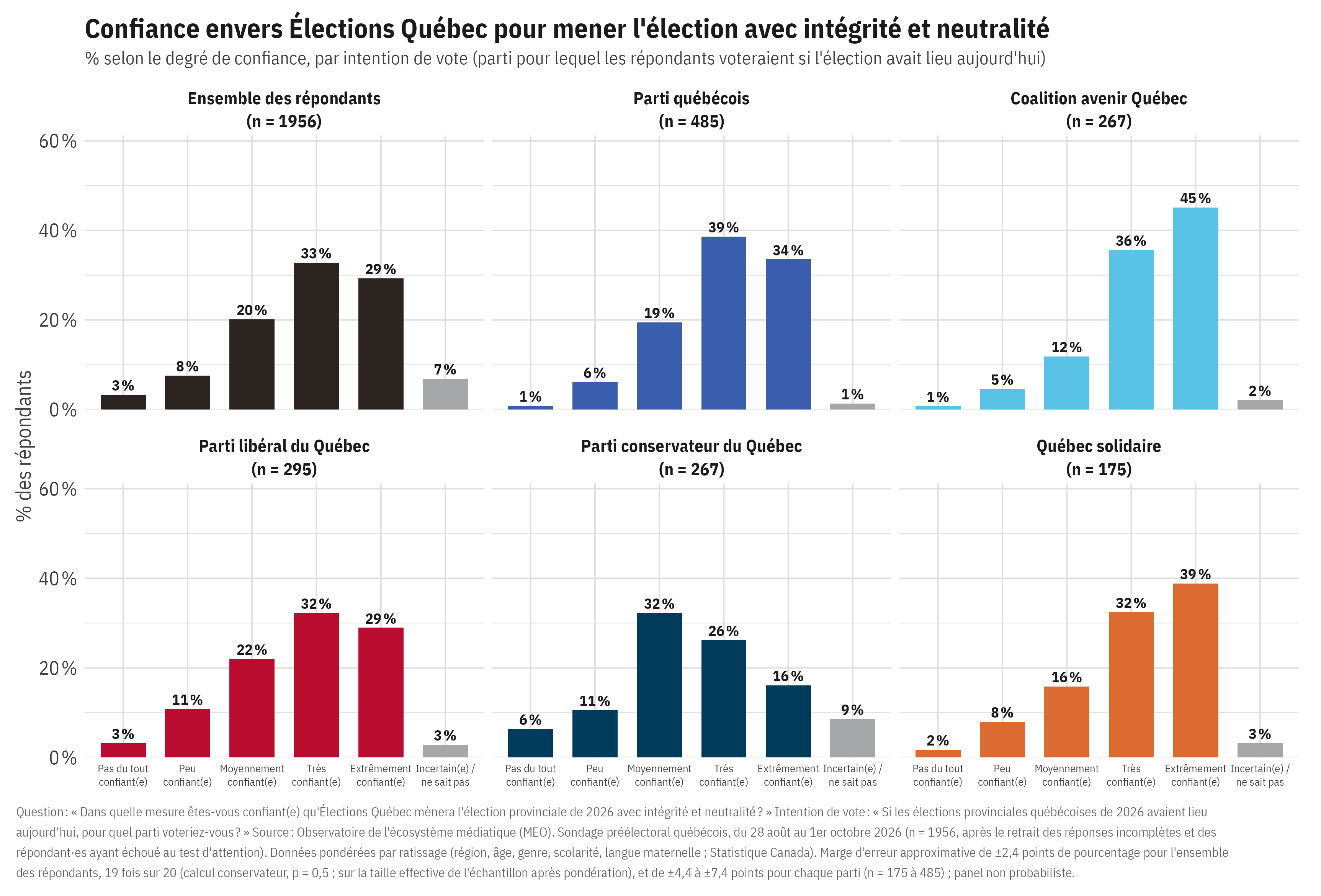
Figure 4 shows the level of confidence that Élections Québec will conduct the 2026 provincial election with integrity and neutrality, by voting intention. Overall, 62% say they are “very” (33%) or “extremely” (29%) confident, 20% are moderately confident, and 11% say they are “not very” (8%) or “not at all” (3%) confident. The percentage saying they are “very” or “extremely” confident is somewhat lower among Liberal Party supporters (61%) and much lower among Conservative Party supporters (42%) than among supporters of the Coalition Avenir Québec (81%), the Parti Québécois (72%), and Québec solidaire (71%). A similar partisan gap existed for the Conservative Party during the 2022 election. That said, it is important to note that despite lower confidence, a significant share of Conservative supporters are in the middle of the scale (for example, 32% say they are “moderately” confident) and only a small minority have very low confidence (6% are “not at all” confident). In the case of the Liberal Party, the lower level of confidence could be explained in part by the events surrounding access to election information in English, as support for this party is significantly higher among non-francophones than among francophones. Confidence is also significantly lower among those who answered the survey in English (48%) than in French (65%).
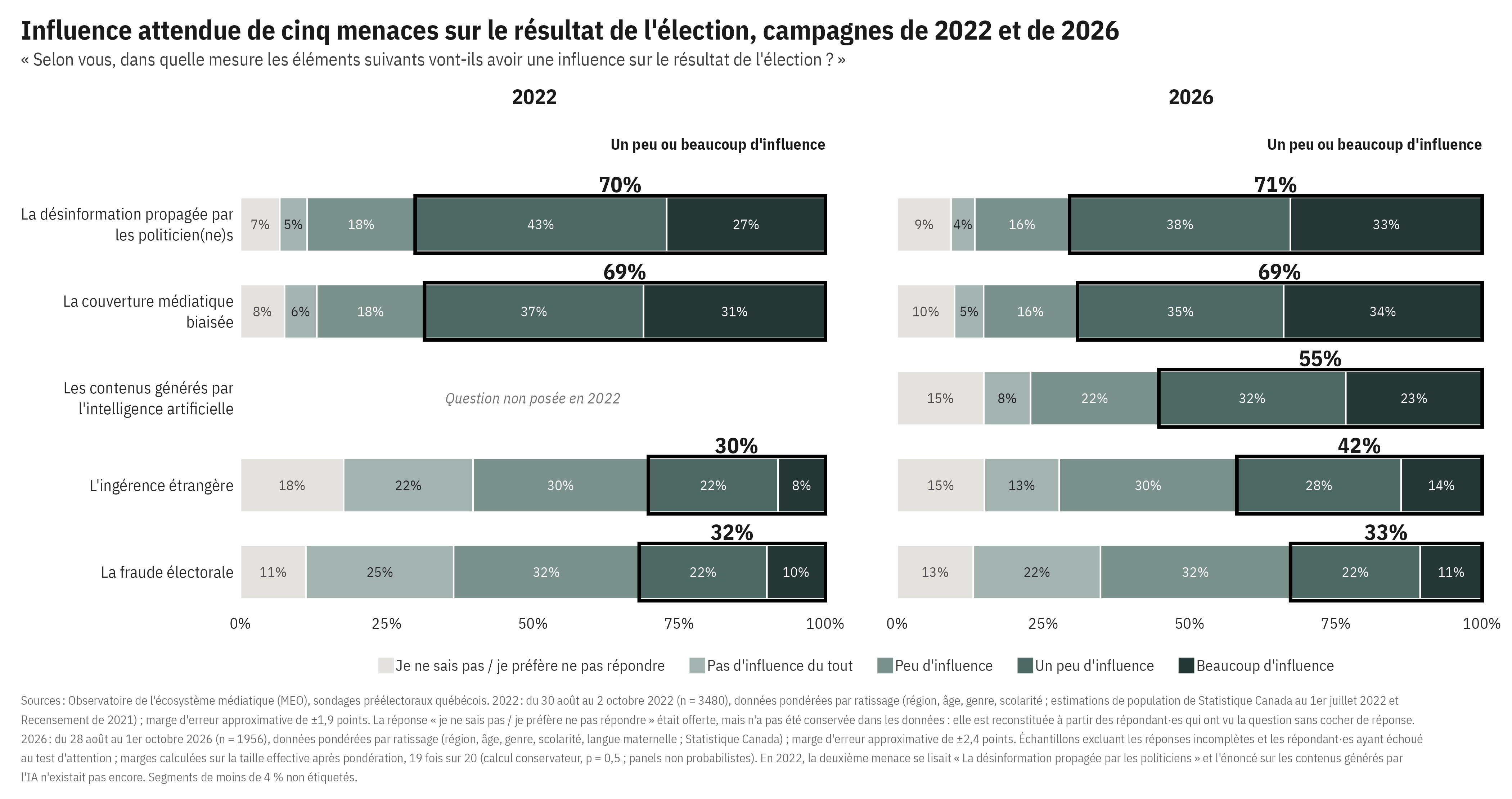
We next look at the expected influence of five types of threats on the outcome of the election: disinformation by politicians, media bias, foreign interference, electoral fraud, and content generated by artificial intelligence. Figure 5 compares the level of perceived influence during the 2022 provincial election (see Methodology) with that of 2026. The main finding is that perceptions are very similar to those observed during the 2022 campaign. Specifically, 70% of respondents then believed that disinformation by politicians would have “some” or “a lot” of influence on the outcome, compared with 71% in 2026. For biased media coverage, the percentages are 69% in both 2022 and 2026, while for electoral fraud they are 32% in 2022 and 33% in 2026. The only item for which we see an increase is foreign interference, with the percentage believing it will have “some” or “a lot” of influence on the outcome rising from 30% to 42%. The question on AI-generated content was not asked in 2022, but in 2026, 55% believe it will have “some” or “a lot” of influence on the outcome of the election.
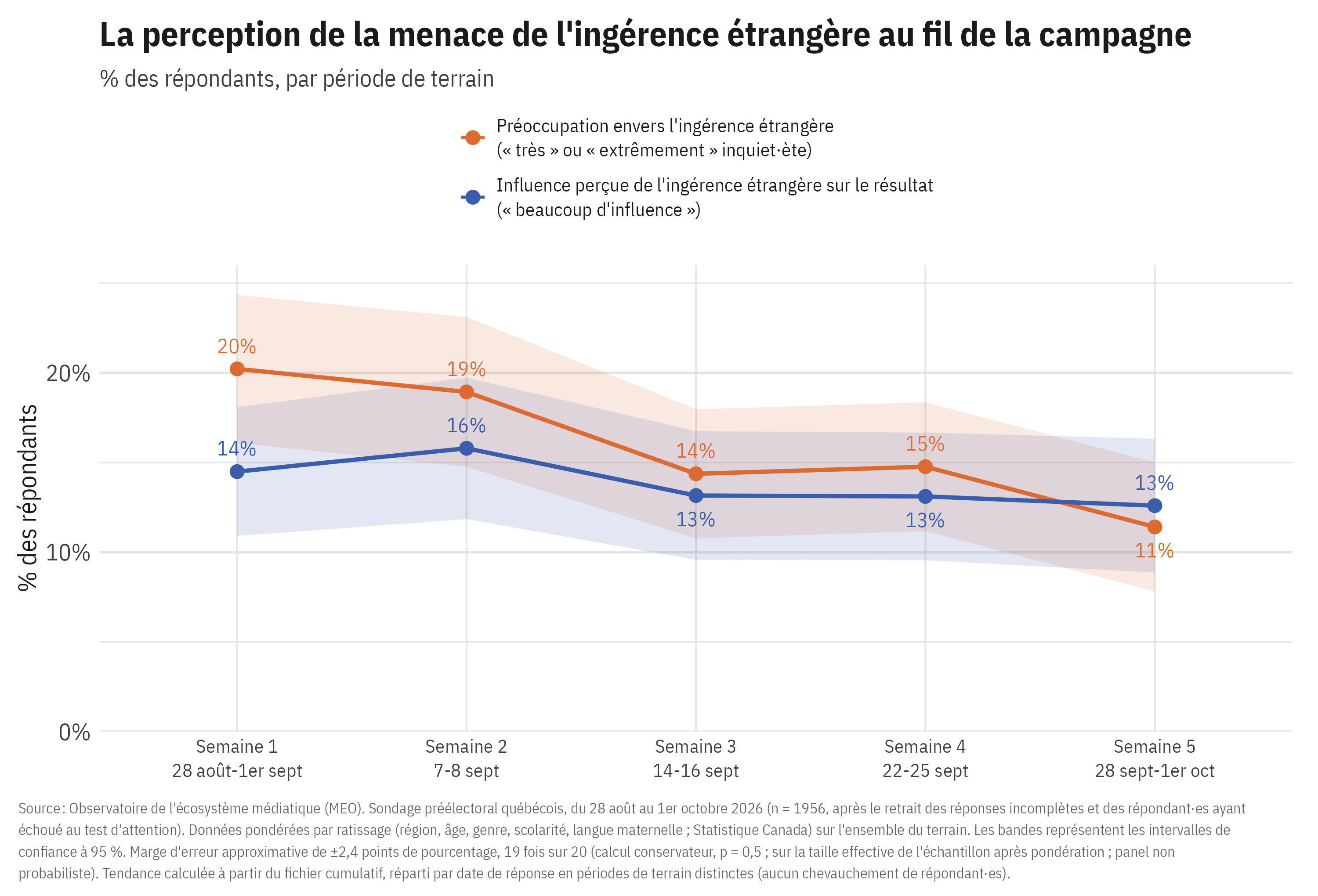
The previous section discussed conversations about possible American interference following a media report published on September 25. We therefore wanted to check to what extent public perceptions had changed, or not, following this report and the reactions of parties and candidates. As Figure 6 shows, we observe no increase this week in the level of concern about foreign interference or in its perceived influence on the outcome of the upcoming election. The percentage of Quebecers saying they are “very” or “extremely” concerned was somewhat higher at the start of the campaign, following the suspension of trade negotiations and Trump's and Lutnick's statements about them, than at the end.
Knowledge of the Electoral Process
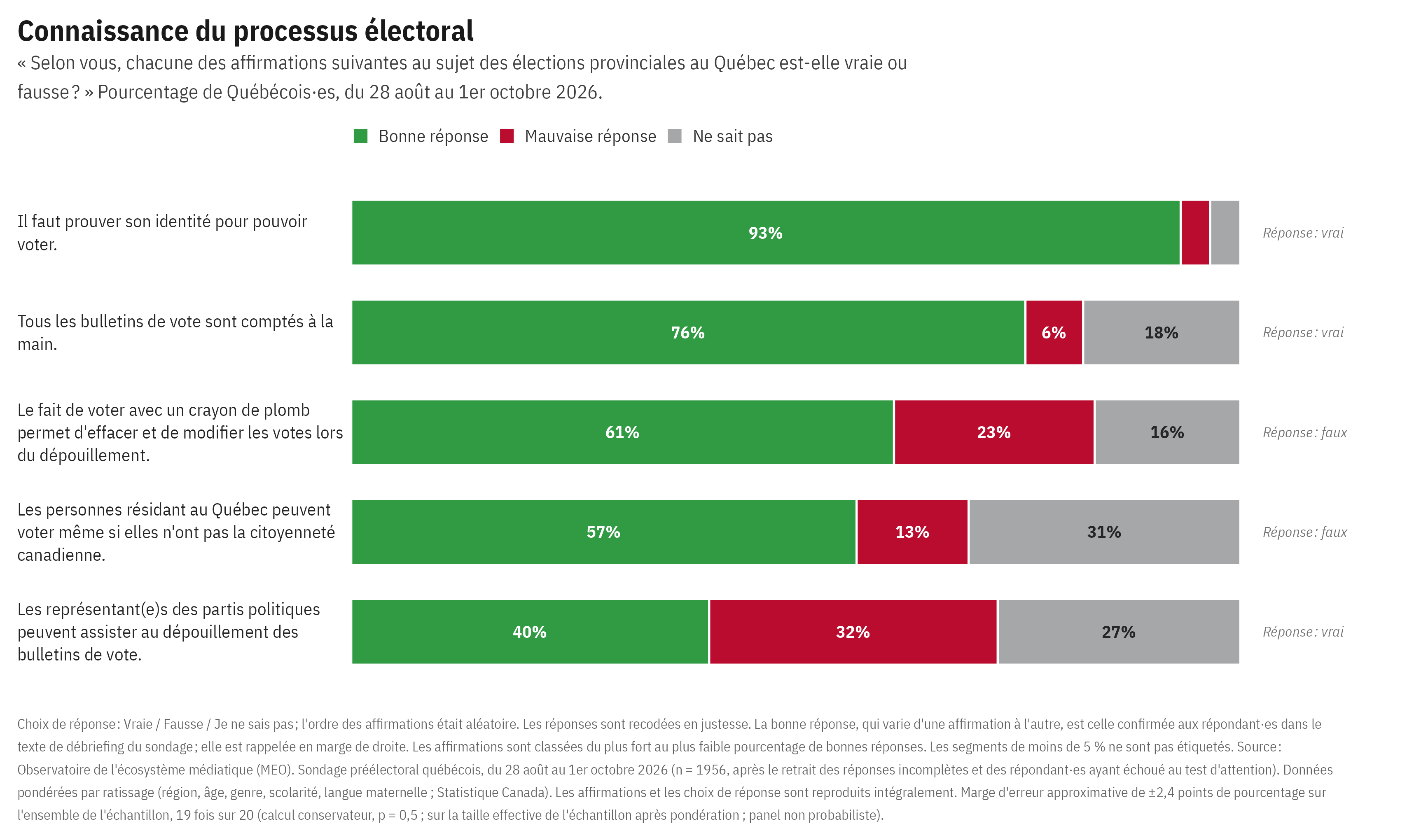
One of the factors that can foster the spread of, and belief in, false information about electoral integrity is a lack of knowledge about how elections work. To assess the level of knowledge in Quebec, we asked respondents to evaluate the accuracy of five statements about the electoral process. As Figure 7 shows, nearly all respondents (93%) recognize that voters must prove their identity in order to vote. More than three quarters of respondents (76%) also correctly indicated that all ballots are counted by hand in Quebec elections. In previous elections in Canada and Quebec, lower knowledge on this dimension had been associated with the online spread of narratives about Dominion voting machines.
The percentage of correct answers is somewhat lower regarding the use of pencils for voting (61%) and citizenship as a criterion for voting eligibility (57%). In the first case, 23% said they believe that voting with a pencil makes it possible to erase and alter votes during the count, and 16% said they did not know. In the second case, 13% said they believe Quebec residents can vote even if they are not Canadian citizens, and 31% said they did not know.
Finally, the fact that political party representatives may be present during the counting of ballots does not appear to be widely known in Quebec: only 40% said it was true, 32% said it was false, and 27% said they did not know. That said, it is possible that the use of the word “assister” (to attend) in the French wording of the question was interpreted by some as indicating that party representatives can take part in the count (rather than simply observe it), which is not the case.
Overall, we observe lower knowledge of the electoral process among those who say they do not trust Élections Québec, among the youngest age groups, and among those with lower levels of education or less interest in politics.
On Our Radar
Is It Legal to Post a Photo of Your Ballot? This week, with the opening of advance polling stations, several voters posted photos of their ballots online. In a widely shared Facebook post (more than 700 reactions), the Conservative Party of Quebec candidate in Nicolet-Bécancour claimed that photographing one's ballot was prohibited in Quebec and that people who share these photos on social media face “a hefty fine.” This claim is inaccurate. Élections Québec encourages voters not to take photos or videos in the polling station in order to protect the secrecy of the vote and prevent any form of pressure or vote buying. However, no penalty is provided for people who do not follow this guidance. The confusion may stem from federal rules, under which photographing a marked ballot could be punishable by a fine and imprisonment.
Methodology
Survey
2026 Data. The analysis draws on a bilingual (French and English) pre-election survey conducted from August 28 to October 1, 2026 by the Media Ecosystem Observatory among the Quebec population. The survey was administered on the Qualtrics platform to Léger's online panel (LEO), using quota sampling (region, age group, gender, and language) based on Statistics Canada reference data. Respondents were compensated through Léger's standard panel rewards program. Regional quotas are based on three strata — the Montreal census metropolitan area (CMA), the Quebec City CMA, and the rest of Quebec — constructed from respondents' reported administrative region and municipality of residence.
The questionnaire was restricted to Canadian citizens aged 18 and older residing in Quebec. The final sample, after removing incomplete responses and respondents who failed the attention check, includes 1,956 respondents, 1,665 of whom answered in French and 291 in English. All analyses use weights obtained through raking. Calibration covers five margins: region (Montreal CMA, Quebec City CMA, rest of Quebec), age group (18–24, 25–34, 35–44, 45–54, 55–64, 65 and older), gender, education (high school or less; postsecondary below a bachelor's degree; bachelor's degree or higher), and mother tongue (francophone; anglophone or allophone), based on Statistics Canada population estimates. The method includes a rule to trim weights falling outside the [0.25, 4] interval; this rule was not triggered, as all weights already fell within the interval (in practice, weights range from 0.39 to 2.03). Because the sample is non-probability, the margins of error presented are approximate and assume simple random sampling: based on the effective sample size, the margin of error is ±2.4 percentage points, 19 times out of 20 (conservative calculation, p = 0.5).
2022 Data. The analysis draws on a bilingual (French and English) pre-election survey conducted from August 30 to October 2, 2022 by the Media Ecosystem Observatory among the Quebec population, ahead of the October 3, 2022 provincial election. The survey was administered on the Qualtrics platform to Léger's online panel, using quota sampling (region, age group, gender, and language) based on Statistics Canada reference data. Respondents were compensated by Léger's panel, provided they completed the entire questionnaire. Regional quotas are based on three strata — the Montreal census metropolitan area (CMA), the Quebec City CMA, and the rest of Quebec — constructed from respondents' reported administrative region and municipality of residence.
The questionnaire was restricted to Canadian citizens aged 18 and older residing in Quebec. The final sample includes 3,480 respondents, 3,075 of whom answered in French and 405 in English. It excludes incomplete responses, responses recorded on or after election day, duplicates from the same panelist, and respondents who failed the attention check. All analyses use weights obtained through raking. Calibration covers four margins: region (Montreal CMA, Quebec City CMA, rest of Quebec), age group (18–24, 25–34, 35–44, 45–54, 55–64, 65 and older), gender, and education (high school or less; postsecondary below a bachelor's degree; bachelor's degree or higher), based on Statistics Canada population estimates as of July 1, 2022 (region, age, gender) and the 2021 Census (education). The method includes a rule to trim weights falling outside the [0.25, 4] interval; this rule was not triggered, as all weights already fell within the interval (in practice, weights range from 0.45 to 2.85). Because the sample is non-probability, the margins of error presented are approximate and assume simple random sampling: based on the effective sample size, the margin of error is ±1.9 percentage points, 19 times out of 20 (conservative calculation, p = 0.5).
Social Media
The Corpus. The Observatory continuously tracks 1,121 Quebec accounts across six platforms (X, Facebook, Bluesky, YouTube, Instagram, and TikTok): 599 candidates (598 from the five main parties and one from the Green Party), 109 media accounts, 135 journalists, and 278 influencers, including 204 commentators. Between August 1 and September 26, 2026, these accounts produced 259,878 posts. This is an account-based corpus, not a keyword search: we observe what actors identified as influential in the public sphere publish, not everything that is said in Quebec. Comments from the public are not included.
To build the candidate list, we collected data from the official websites of political parties with at least one sitting member in the National Assembly of Quebec (Coalition avenir Québec, Parti libéral du Québec, Québec solidaire, Parti québécois, and Parti conservateur du Québec), as of September 1, 2026. We continue to update this list for upcoming weekly reports. From the candidates section of each party's website, we extracted the following information: the candidate's name, electoral riding, and social media account handles. Accounts were collected across six platforms: Facebook, Instagram, X/Twitter, Bluesky, TikTok, and YouTube. When a party's website had no candidates section, we manually reviewed the announcements section and collected the candidate's name and riding from each post announcing a nomination. Because the list of social media handles on party websites may be incomplete, we supplemented it by manually checking the handles listed on party websites to see whether they mentioned or linked to other social media accounts (e.g., via Linktree). When no handle was listed on the party's website for a candidate, we searched online for possible accounts to add. Each account was checked against the following criteria: the account officially belongs to the candidate, and it is a public account used for their political activities. We did not include any handle that was not listed on the party's website, mentioned by another verified account belonging to the candidate, or mentioned or followed by another candidate's verified account. We also did not include accounts primarily devoted to posting personal content.
One of the analyses also covers 500 American political or media influencers, 472 of whom posted during the period. To identify them, we first drew up a broad list from several sources: a Pew Research Center report on news influencers, the most popular podcasts, accounts mentioned by the Canadian accounts we already track, social media monitoring tools, and manual searches. We retained only individuals, groups, or shows based in the United States with at least 20,000 followers on one platform and the majority of whose posts deal with politics or current affairs. We then kept the 500 accounts with the most followers overall. These influencers produced 320,183 posts between August 25 and September 29.
The Public Corpus. In addition to the corpus of tracked accounts, which answers the question “what did the actors we track publish,” we have a second, so-called “public” corpus that is based not on a list of accounts but on a list of keywords. A post enters it because it contains one of these keywords, regardless of its author: member of the public, activist, media outlet, journalist, or candidate. Account type is not coded as it is for the account lists mentioned above.
Collection covers five platforms: X, Instagram, Bluesky, TikTok, and YouTube. The keyword list covers four families of terms:
- the parties and their acronyms (e.g., CAQ, PQ, PLQ, PCQ, QS, “Parti Québécois,” etc.) and their official accounts;
- the leaders, by name, with and without accents, their common nicknames (PSPP), and their accounts;
- generic election vocabulary, in French and English, combined with the word Québec (e.g., “Québec élection,” “Quebec vote,” “Quebec circonscription,” “QC voters,” “#polqc,” etc.);
- information integrity vocabulary combined with the word Québec (e.g., “Québec désinformation,” “Québec ingérence,” “Québec complotiste,” “QC disinformation”).
The window runs from August 25, just before the campaign was called, to September 26, 2026 inclusive. Within this window, collection returned 3,572,542 distinct posts, published by 1,079,895 different accounts: 3,468,313 on X, 58,695 on Instagram, 17,626 on Bluesky, 15,852 on TikTok, and 12,056 on YouTube.
Issue Coding. Every post is run through a language model (Qwen3.8-27b) that determines, without chain-of-thought reasoning, which issues it addresses, from eighteen non-exclusive categories: cost of living, taxes, economy and employment, public finances, trade war and tariffs, health, education, housing, transportation, environment, immigration, the French language, secularism, independence, crime, ethics and integrity, artificial intelligence, and social issues. A post may address several issues or none (e.g., campaign events, thank-you messages, links without commentary, replies in a thread).
Electoral Integrity Coding. Every post is run through a language model (Qwen3.8-27b) that assesses 1) whether the post is about Quebec, 2) whether it is about the Quebec election, and 3) whether it is about electoral integrity. Where applicable, the post is classified:
- By topic: 1) foreign interference; 2) federal interference; 3) vote-counting fraud; 4) election administration bias; 5) unfair electoral rules; 6) financial disclosure; 7) inauthentic activity; 8) voter suppression.
- By tone: 1) alleges (indicates that the process is compromised); 2) defends (contradicts or corrects an allegation); 3) reports (neutral news or description of an allegation or concern); or 4) none.
- By accused entity: 1) election administration; 2) the Quebec government; 3) the federal government; 4) the courts; 5) a party or candidate; 6) a foreign state; 7) other; 8) none.
A total of 5,034 posts were identified as dealing with electoral integrity. These posts account for 6,095 topic or category assignments, since a post may address more than one category. For example, some posts about election documents being sent in French only are classified under both “unfair electoral rules” and “voter suppression.”
Engagement. Our engagement analysis relies on “likes,” the only metric available across all platforms. Using likes isn't necessarily comparable from one platform to another, but it is the best available measure of public engagement with the content.
Related Publications
A Striking Lack of Evidence: Did Ukraine’s Bombing of Russian Data Centres Wipe Out Kremlin Bots?
Read more
Alberta’s Referendum, Online: Election Fraud Claims Ahead of the October 19 Vote
Read more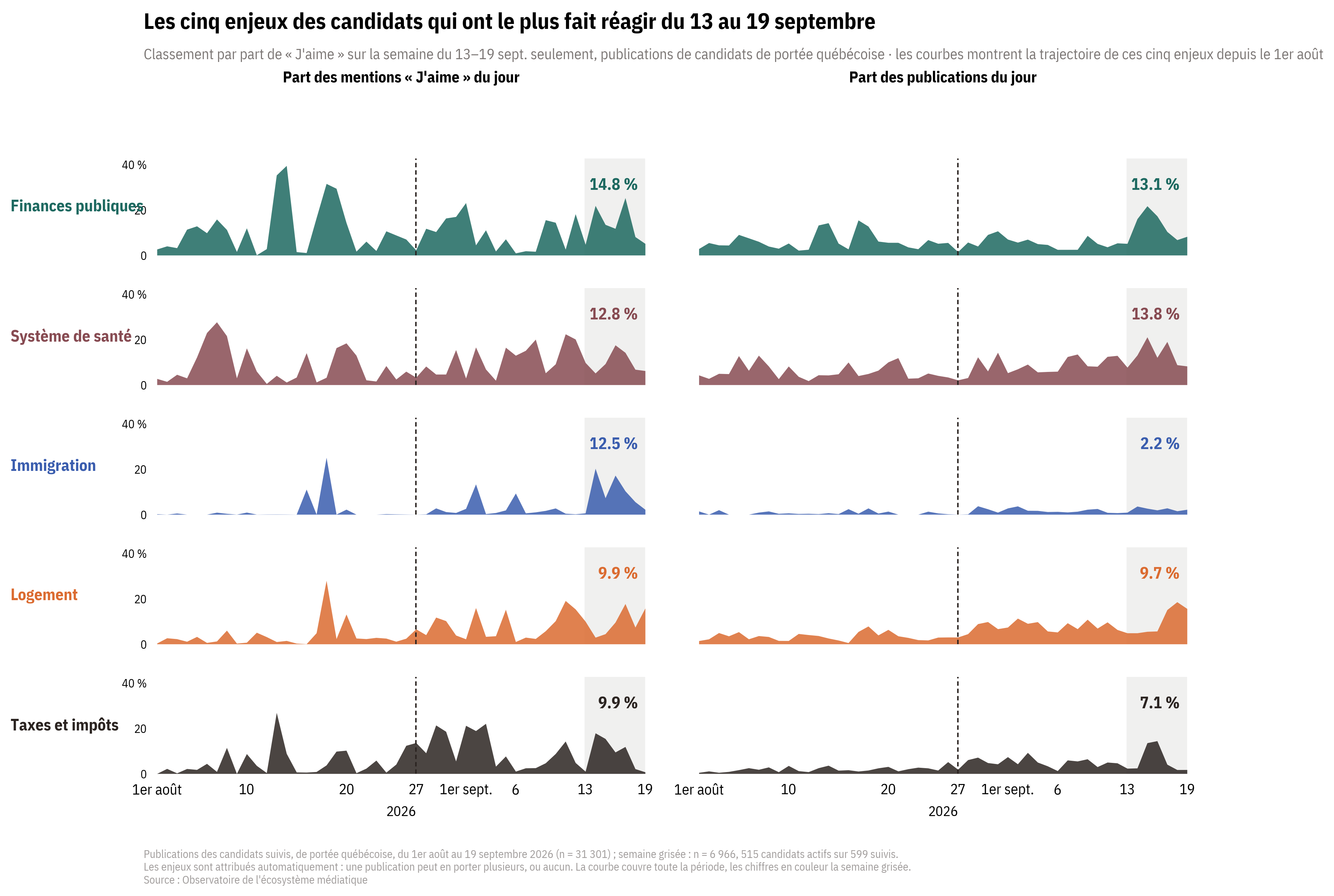
Weekly Update 4: An Election Without News Media on Facebook
Read more