Getting Beyond 'Big is Bad': Rethinking the Impact of Platforms on Competition Through the Lens of Market Distortion
Jennifer Quaid
Résumé analytique
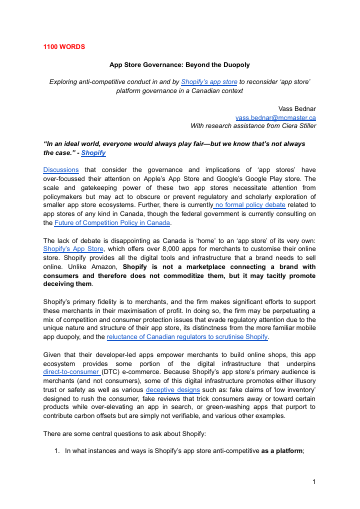
Are platform operators, online marketplaces, and digital gatekeepers beneficial engines of disruption or damaging agents of distortion? From a competition-law perspective the answer is a maddening "both," and building a governance framework that can tell benefit from harm in fast-changing digital markets has preoccupied major competition authorities. The pace of reform has varied: the European Union has advanced furthest with instruments such as the Digital Markets Act, while in the United States a set of 2021 bills, including Senate Bill 2992 (the American Innovation and Choice Online Act), stalled even as the FTC and DOJ pressed ahead. Canada lags its peers, having enacted only limited preliminary reforms in June 2022 through Bill C-19 — the first amendments to the Competition Act in 13 years — with a more substantial second stage still pending.
Much emerging platform regulation draws bright lines around the largest firms using metrics like market share, user numbers, or market capitalization, treating certain practices by firms above those thresholds as inherently or presumptively harmful. This "big is presumptively bad" logic chafes against the classical tenet that neither market share nor absolute size should be presumed to confer market power.
Quaid proposes an alternative grounded in the rationale behind prohibiting deceptive marketing: market distortion. Deceptive conduct distorts markets by exploiting the transparency and trust that informed choice requires, harming both misled consumers and honest competitors. There is precedent — the FTC's 2019 Stipulated Order against Facebook and the Competition Bureau's parallel Canadian action settled in 2020. Extending the market-distortion concept would sanction platform conduct independent of size, could be implemented immediately under existing rules without waiting for further reform, fits the Bureau's core mandate, and lets Canada focus scarce enforcement resources on harm to Canadian markets and consumers.
Publications connexes
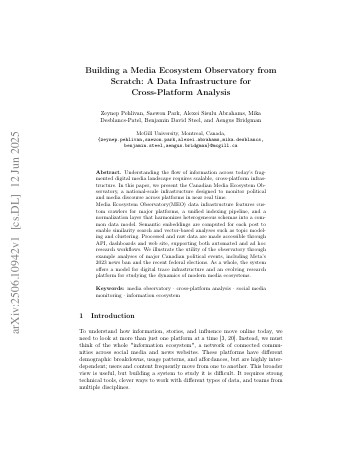
Building a Media Ecosystem Observatory from Scratch: Infrastructure, Methodology, and Insights
Lire la suite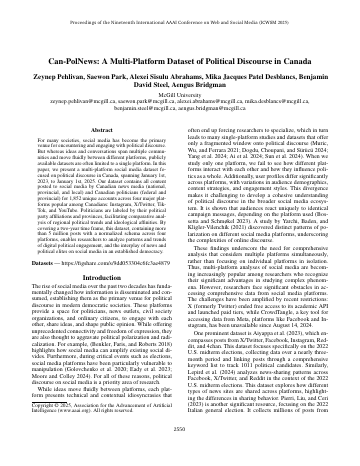
Can-PolNews: A Multi-Platform Dataset of Political Discourse in Canada
Lire la suite
Polarization as the Technological Goal – Not the Error
Lire la suite