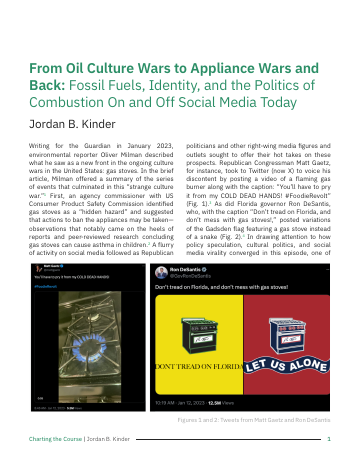
Multicultural Technologies For Climate and Environmental Justice
Naolo Charles
doi.org/10.66536/ct-multicultural-technologies-climate-justice_2021Résumé analytique
Opening with W.E.B. Du Bois's 1900 Paris Exposition, where he used innovative data visualizations and photography as counter-narratives to racist stereotypes, this essay by Naolo Charles argues that a just climate transition requires more than technical inventions. It requires innovative "human systems" or "cultural technologies" that reshape social norms and mental models alongside reformed economic and social systems.
Charles distinguishes mono-cultural technologies, which promote the dominance of one culture and uphold Eurocentric, extractive capitalist norms, from multi-cultural technologies, which promote balanced power dynamics and communal interests. He introduces "colonial gravity" to describe how cultural patterns tend back toward colonial norms, benefiting actors aligned with colonial rule while producing environmental racism against Indigenous, immigrant, and racialized communities. Just as agricultural monoculture inhibits biodiversity, a monocultural model of technology prevents diverse innovation ecosystems from thriving.
Drawing on his work with the Black Environmental Initiative and the Canadian Coalition for Environmental and Climate Justice, Charles offers concrete examples of community-led, multi-cultural technology: mapping tools that expose patterns of polluting industry and health harm (Flint, Chicago's EnviroReport, Inuit GIS monitoring), community energy projects, and AI applications such as Dr. Paulin Coulibaly's flood-forecasting work. He stresses that ethical environmental data demands transparency and comparability, and that such projects require pre-existing social infrastructure often lacking in low-income communities.
He concludes that no technology addressing environmental harm can reach its potential without concurrent cultural technologies that decentralize innovation away from Eurocentric paradigms and center the well-being of racialized and low-income communities.
Publications connexes
Extractive AI
Lire la suite
Resisting Detached Datafication: What Toxic Prisons Teach Us about the Imperative of Restorative/Transformative Data Science for Environmental and Social Justice
Lire la suite
The Oil And Gas Obstruction Network Blocking Canadian Climate Action
Lire la suite