
2026 Alberta Referendum
On October 19th, Albertans will vote on a referendum asking whether Alberta should remain a province in Canada or commence the process for a binding referendum on separation.
The online conversation about the referendum is a contentious space, and one where pro-independence political influencers are dominating. In the absence of elected officials campaigning on the independence side, our research aims to characterize the major voices driving the online conversation, on both sides.
Over the next month, we will continue to monitor the use of AI technologies in the information ecosystem, attention from foreign actors and publish findings on information manipulation in the lead up to this important vote.
Explore the data for yourself
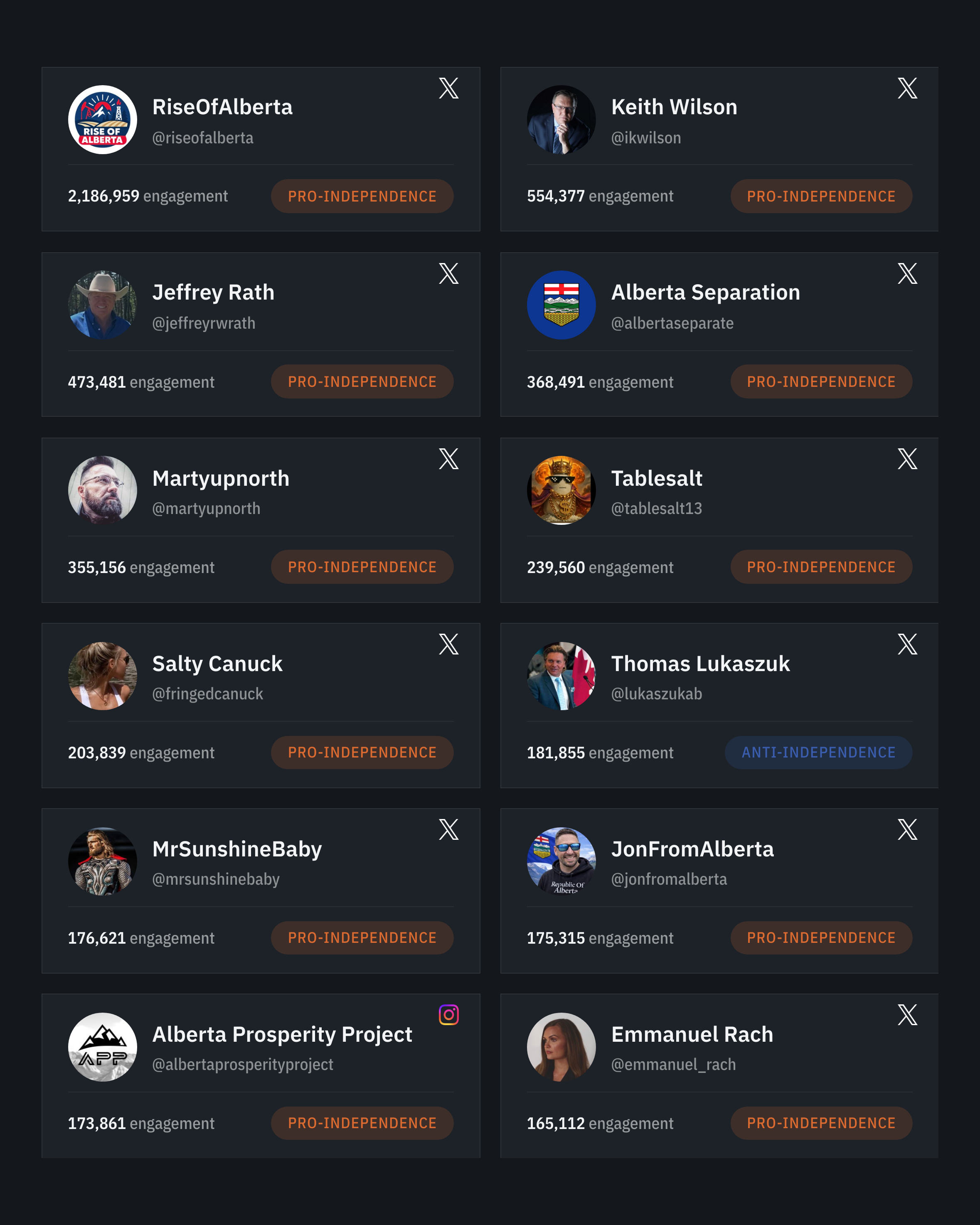
Interactive visualizations
Alberta is heading into a referendum on October 19, 2026, in a rapidly changing information environment. In analyzing the major voices and dynamics shaping the online discourse, we've found that the conversation is largely driven by a community of 114 influencer accounts. Among them, pro-independence accounts outperform anti-independence ones by a ratio of roughly 8:1 — a striking contrast to general public opinion where polling shows roughly two-thirds of Albertans would vote to remain in Canada. Another new development is how voters may use AI search and chatbots to understand the political landscape. We've found that Google AI Overview and ChatGPT can sometimes give inconsistent, even contradictory answers to the same questions, raising concerns about public trust and understanding towards the referendum.
Explore the dataFeatured Reports
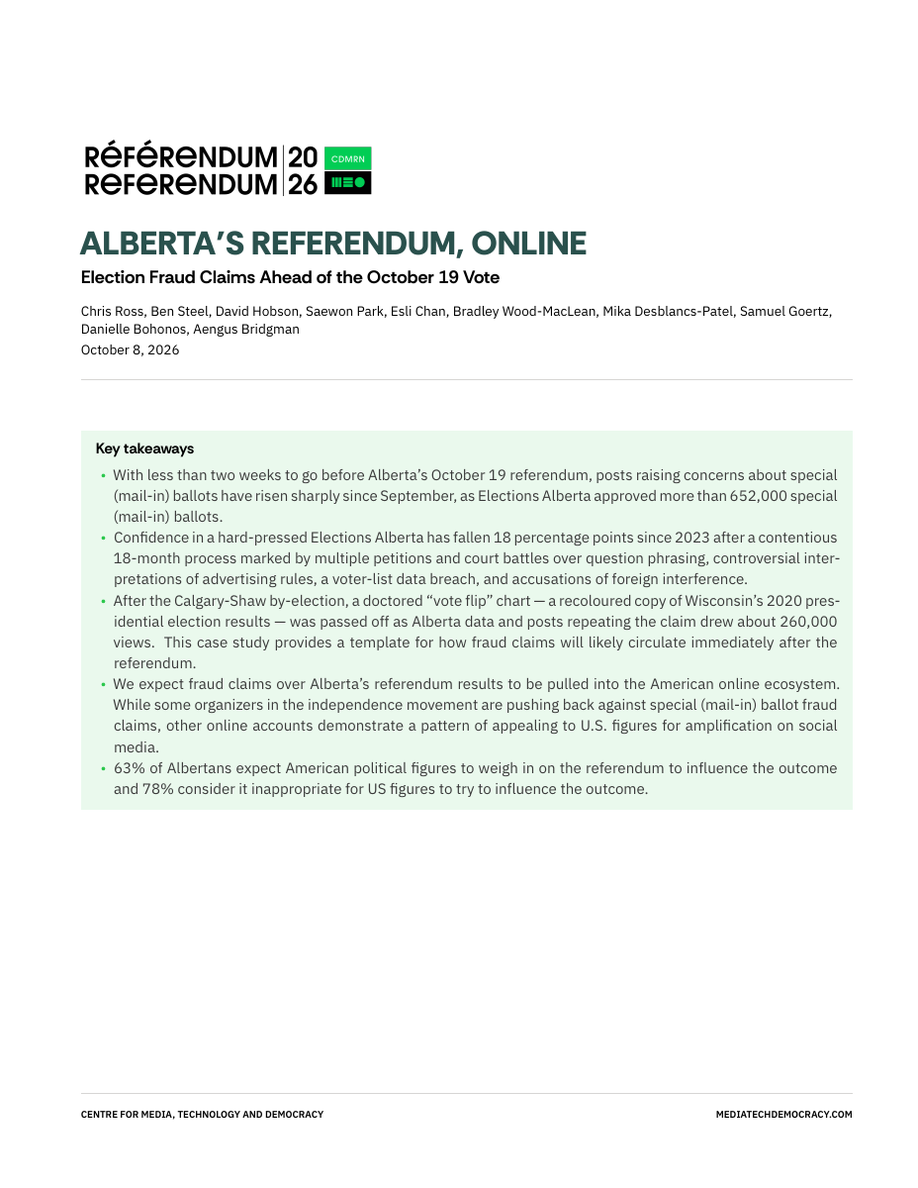
Alberta’s Referendum, Online: Election Fraud Claims Ahead of the October 19 Vote
October 2026
With less than two weeks to go before Alberta’s October 19 referendum, online posts raising concerns about special (mail-in) ballots have risen sharply, as Elections Alberta approved more than 652,000 of them. At the same time, confidence in Elections Alberta has fallen 18 percentage points since 2023, across the political spectrum, after a contentious 18-month process.
Using the Calgary-Shaw by-election as a case study — where a recoloured copy of Wisconsin’s 2020 presidential vote count was passed off as Alberta data and drew about 260,000 views — this report shows how fraud claims are likely to circulate on referendum night, and why we expect them to be pulled into the American online ecosystem.
Learn More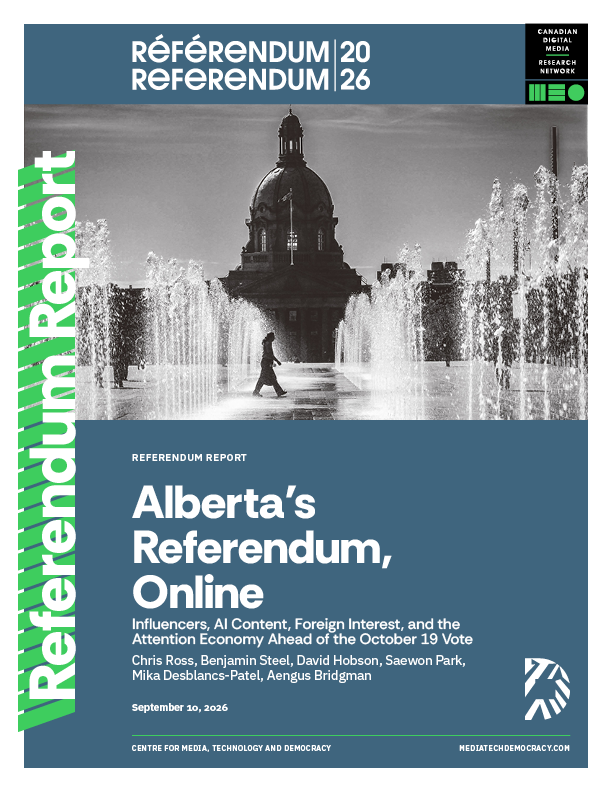
Alberta’s Referendum, Online: Influencers, AI Content, Foreign Interest, and the Attention Economy Ahead of the October 19 Vote
September 2026
As Alberta heads toward its October 19 referendum, this report finds the online conversation dominated by a small, passionate community of influencers rather than elected officials: 114 accounts have captured roughly half of all engagement across five platforms since January 2025, with pro-independence voices outperforming pro-Canada ones by about 8 to 1.
The report also tracks two emerging forces shaping the campaign: AI chatbots and search tools that give inconsistent, sometimes contradictory answers about secession, and a 3.5-fold rise in AI-generated imagery among pro-independence posts. While polling shows roughly two-thirds of Albertans would vote to remain in Canada, the online conversation runs the opposite direction — a gap the report argues our democratic institutions need to keep pace with.
Learn More